


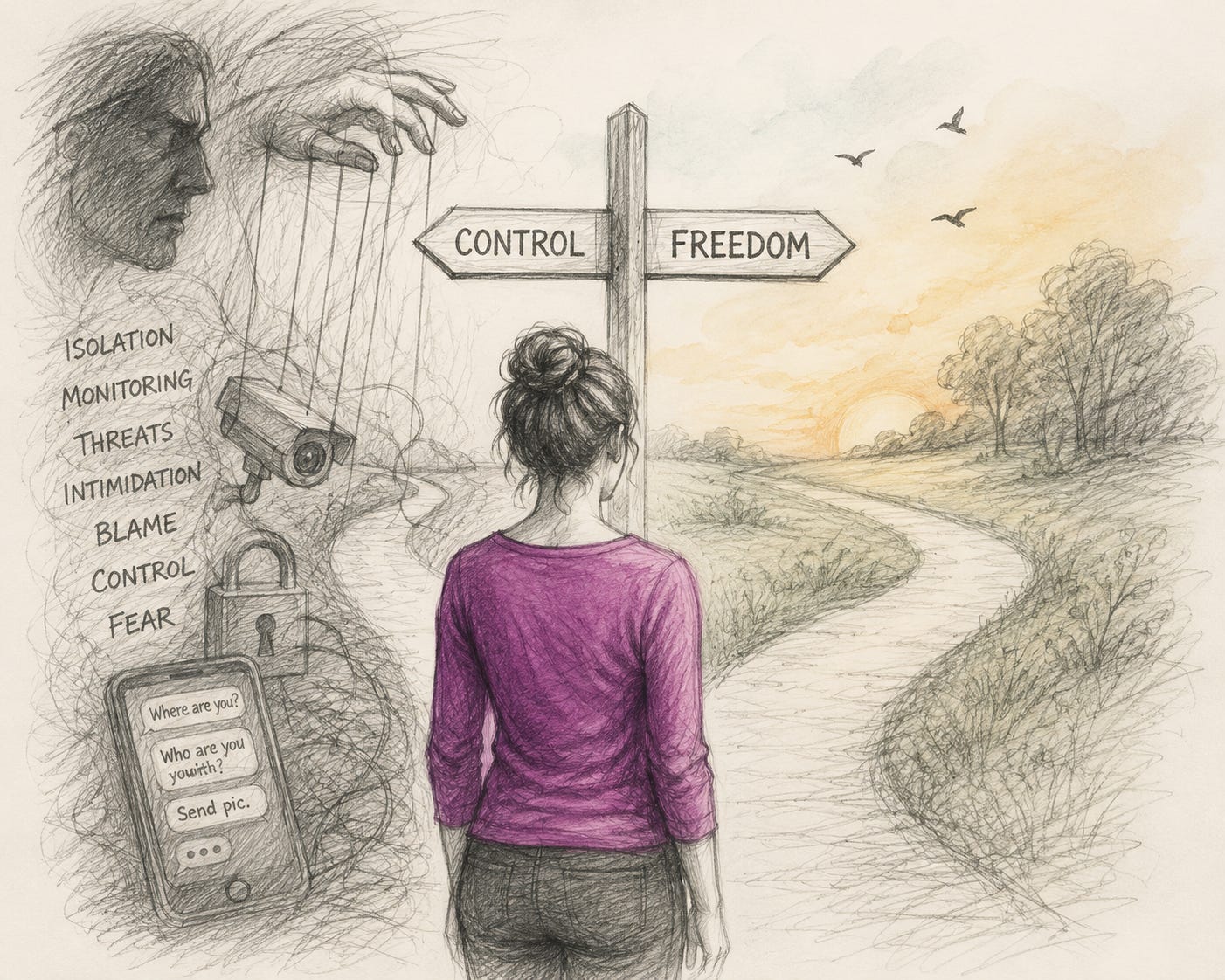
One of the most frustrating things about trying to explain domestic abuse is that people want an incident. What did he do? Did he hit you? Did he threaten you? Did you call the police? Those questions can matter, but they can also miss what is actually happening.
Sometimes the abuse is the accumulation of a hundred things designed to accomplish one thing: control. Massachusetts law now recognizes that.
In 2024, Massachusetts changed its domestic abuse law to explicitly include coercive control in the definition of abuse used for Chapter 209A abuse-prevention orders. The change took effect September 18, 2024. That means the law can look beyond a bruise or a single threat and consider a pattern of behavior intended to threaten, intimidate, harass, isolate, control, coerce or compel someone to comply.
What Coercive Control Can Look Like
The behaviors Massachusetts chose to identify are not exotic. They are the kinds of things people living with abuse often know very well.
The statute includes isolating someone from friends or family, depriving them of basic needs, monitoring communications or movements, controlling money or access to services, and using technology to keep track of them. It can also include forcing someone to do or stop doing something, threatening children or relatives, threatening an animal, damaging property, threatening to expose private information or sexually explicit images, and repeatedly using court proceedings that a judge finds legally unwarranted.
Look at those behaviors together and the picture changes. The pattern is the story.
Any one of those acts can be explained away. I’m worried about you. I’m protecting our money. I just want to know where you are. Your friends are bad for you. Why do you need privacy from me? But when one person steadily takes away another person’s independence, privacy, relationships, financial freedom, movement or ability to make decisions, we are no longer talking about a collection of unrelated disagreements. We are talking about control.
The Word “Autonomy” Matters
There is one word in the Massachusetts law that matters enormously: autonomy.
The pattern can qualify as coercive control when it causes a family or household member to reasonably fear physical harm or have a reduced sense of physical safety or autonomy. That gets much closer to what coercive control actually does.
An abusive person does not need to lock a door to make someone feel unable to leave. Control can become so embedded in everyday life that the victim starts organizing decisions around avoiding the other person’s reaction. Can I say this? Can I spend this? Can I see that person? Can I go there? What will happen if I say no?
After a while, the person doing the controlling does not have to issue an explicit command every time. The system is already in place.
Coercive control is not something that happens only to women. Men can be subjected to it too, and sometimes the pattern is harder to recognize because other people can be drawn into it without realizing the role they are playing. A complaint about a partner may sound perfectly reasonable. You may even agree with it. But repeated criticism can gradually recruit family and friends into reinforcing the criticism and turning against the person being targeted. You can think you are responding to an ordinary complaint and discover much later that you were being enlisted to criticize, shame or isolate someone you love. Sometimes recognizing coercive control means looking not only at what one person is doing to another, but at who else is being pulled into doing it for them.
What This Means for Restraining Orders
Massachusetts abuse-prevention orders are commonly called 209A orders or restraining orders. Coercive control is now one of the forms of abuse a Massachusetts court can consider when deciding whether to issue one.
Massachusetts court guidance says a pattern generally requires three or more acts, and each act must be intended to threaten, intimidate, harass, isolate, control, coerce or compel compliance. Certain particularly serious single acts can also qualify on their own.
That does not mean every controlling relationship automatically results in a restraining order. Judges still have to look at evidence and decide whether the conduct actually meets the law.
What has changed is important: the court is allowed to look at the pattern.
But How Broad Is Too Broad?
That question is now before Massachusetts’s highest court.
In G.P. v. S.P., SJC-13947, the Massachusetts Supreme Judicial Court has specifically asked whether public social-media videos criticizing a former partner can amount to coercive control under Chapter 209A, and whether the state’s coercive-control provision is unconstitutionally vague or overbroad.
That is a real issue worth taking seriously.
A law meant to protect people from coercive abuse still has to respect due process and constitutional protections, including free speech. A bitter breakup, cruel criticism or an ugly social-media post cannot automatically become domestic abuse just because the conduct is offensive.
At the same time, speech and technology can absolutely be used as tools of coercion. Public humiliation, threats, surveillance, disclosure of private information and campaigns designed to intimidate or control someone can be part of a much larger pattern.
That is where the line becomes difficult. Courts now have to sort out where ordinary conflict, even ugly conflict, ends and legally actionable coercive control begins.
I do not think that challenge makes the law less important. It makes careful application of the law more important. Recognizing the pattern does not mean abandoning the evidence. It means knowing what evidence to look for.
I Wish We Had Understood This Decades Ago
I lived through domestic abuse beginning in the 1970s. We did not talk about coercive control. We barely had adequate language for domestic violence.
There were things happening inside marriages that the rest of the world treated as private relationship problems until somebody was physically injured badly enough that the problem became impossible to ignore.
We know more now. At least we should.
Putting coercive control into Massachusetts law does not solve domestic abuse. A law is only as useful as the people applying it, the evidence available, the victim’s ability to get into the system, and the system’s willingness to understand what it is seeing.
But language matters. Recognition matters. Being able to walk into a courtroom and explain a pattern of control, instead of waiting for the next physical act to prove something is wrong, matters.
Maybe the law can teach the rest of us something too. Instead of asking only, What happened? we need to ask, What has been happening?
That question can reveal an entirely different story.
Join This Community
Domestic Assault exists to help us recognize these patterns sooner, understand what they mean, and make it harder for coercion and control to hide behind isolated incidents.
You do not have to be in an abusive relationship now to belong here. You may be trying to understand something that happened years ago, worried about someone you love, or simply trying to get better at recognizing abuse of power when you see it.
Everything I publish here will remain free to everyone. Paid memberships support the research, writing and time it takes to build this community while keeping the work open to all.
If this work matters to you, subscribe and stay with me.